
Beverly Hungry Wolf
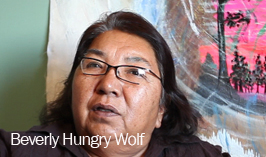 Beverly Hungry WolfA passion for her language and culture.
Author, educator, activist, Beverly Hungry Wolf has been an inspiration to the Blackfoot people for a long time. Beverly was raised on the Blood Reserve by parents and grandparents who fostered her interest in her Blackfoot culture.
Sik-ski-aki has become an internationally known spiritual leader and educator because of her passion for her culture and language. She has been intimately involved in the cultural and ceremonial practices of the Blood People for the past 40 years and has written extensively on her people’s traditions and way of life. She has used her traditional and modern education to teach in many areas including home schooling her own four children and at various universities and schools in Canada, the USA and abroad.
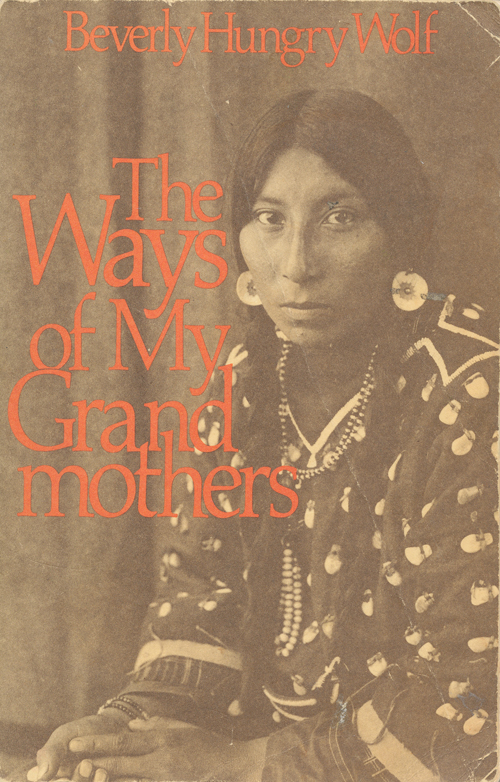
One of her books The Ways of My Grandmothers is published in six languages. Sik-ski-aki shares the Blackfoot’s unique tribal history and domestic skills, as told to her by her mother, grandmother, and other grandmothers from the Blackfoot confederacy. The New York Times Book Review called it “a rare record of American Indian heritage.”
She recently attended film studies in Los Angeles, San Francisco and Vancouver. Sik-ski-aki has been involved in several TV and stage productions, and co-produced several documentaries for the Blood Tribe. She is currently working on her first TV series for the Aboriginal Peoples Television Network, as well as a Blackfoot phonetic phrase book.
Beverly lives on the Blood Reserve in Alberta and serves as Elder to the Lethbridge College, FNMI Cultural Support Program, where she provides personal and cultural support to all students, staff and faculty.
Living in the Beauty of the World
One critical element and saving grace in Beverly’s cultural education was the fact that she grew up in a family that spoke fluent Blackfoot. Even though it was forbidden in school, when they were allowed home for holidays and breaks, they were able to simply, “pick up where they left off”. Locating the boarding schools on the reserves was another saving grace for her people, Beverly says. Despite being forced to attend residential school with all of its culturally oppressive doctrines, they were able to return to a place where the culture was still intact. And once back in their home environment, they had, “nothing else to do, but practice their culture”.
Growing up, Beverly heard mostly traditional Blackfoot music. Her brothers drummed and sang. Often someone brought a big drum to their house and they spent the evening telling jokes, eating and singing. One of her earliest and fondest memories was of her and her little cousins, all crowded into their grandfather’s bed for warmth on a frosty morning, listening to the sound of him tapping a beat on the bedframe while he sang sacred songs.
Beverly also sang herself and not only could she sing and annotate the songs, she also gave her brothers critiques of their singing (asked for, or not). At residential school she often sang for the younger girls to entertain them and make them feel safe in the fearful environment. But she was also very drawn to the music she heard at school; the concerts, Easter and Christmas pageants and talent shows. One particularly significant experience happened when Beverly was in Grade Six. A group of Cree students from Hobbema came to perform at St Mary’s. One of the girls performed a funny story that she had written herself. In that darkened auditorium, Beverly discovered what spoken word could be and she continues to explore that art form for herself in her screenplays, books and readings.
In her art work and her role as an elder, Beverly sees herself as a “cultural bridge” from the ways of her grandmothers and grandfathers to contemporary society. She is dedicated to helping young people to go back and, “revisit our value system”. She knows that despite having to live in a modern world, the traditional values and way of being are essential to living a fulfilled life, “in the beauty of the world”.
Book published and available here: harpercollins.com