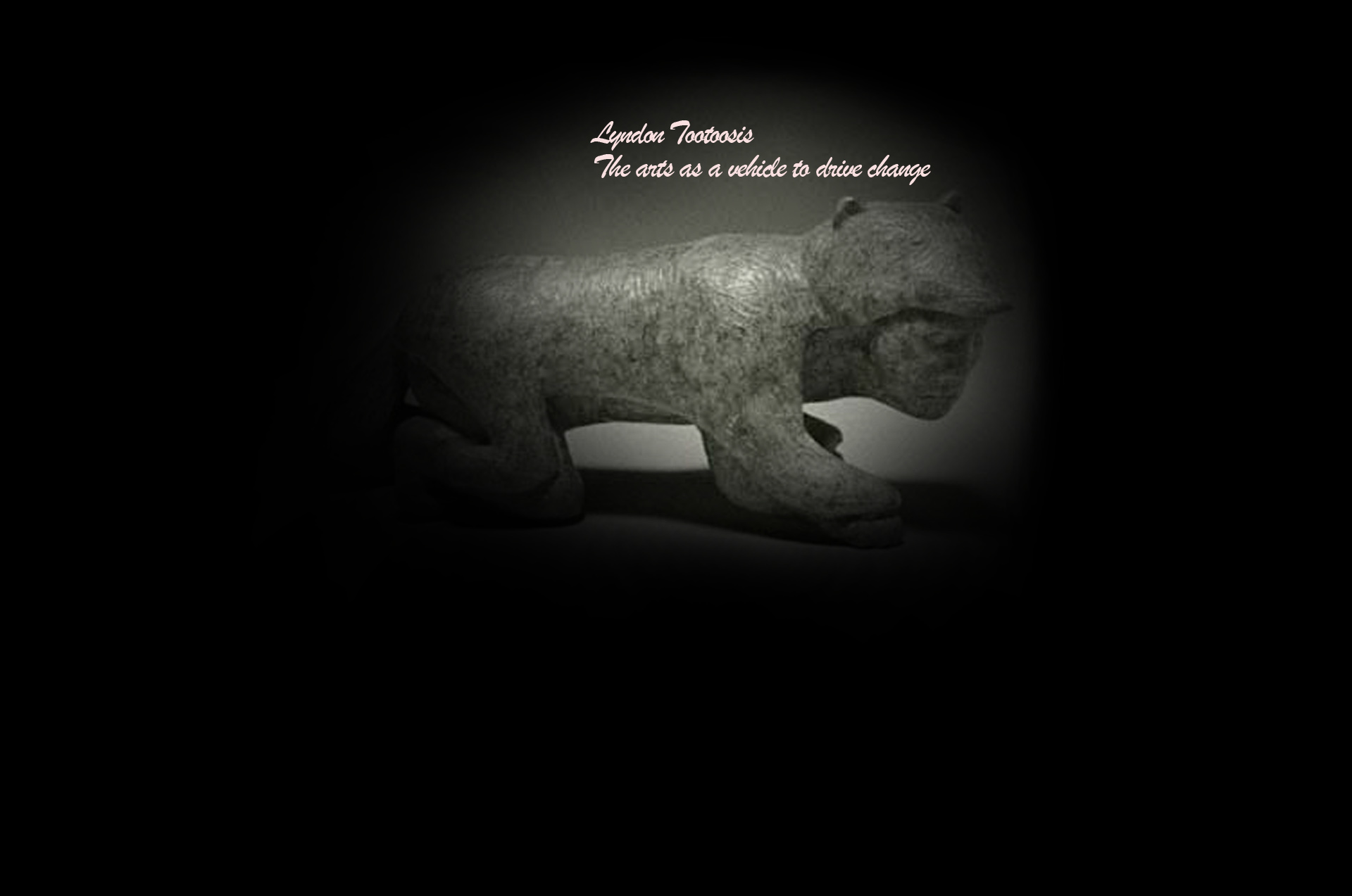

 Lyndon TootoosisThe arts as a vehicle to drive change
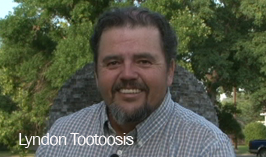
Lyndon Tootoosis is a "Battle River" Cree and member of the Poundmaker First Nation. The youngest of ten, he was raised by his father, the late Ernest Tootoosis and his mother, Amy Norman Tootoosis. After attending boarding school at Hobbema for a few years, Lyndon dropped out. When Lyndon was fourteen, his mother was tragically killed and then, only a few years later, he also lost his father. These losses coupled with his growing sense of self loathing, caused him to pull away from the traditional life and he fell into a downward spiral. Between the ages of seventeen to twenty-nine, Lyndon says that if he "wasn't in jail; he was drunk". However, when he was twenty-nine, he went back to complete high school in North Battleford, and then went on to study at the University of Regina, Saskatchewan Federated Indian College.
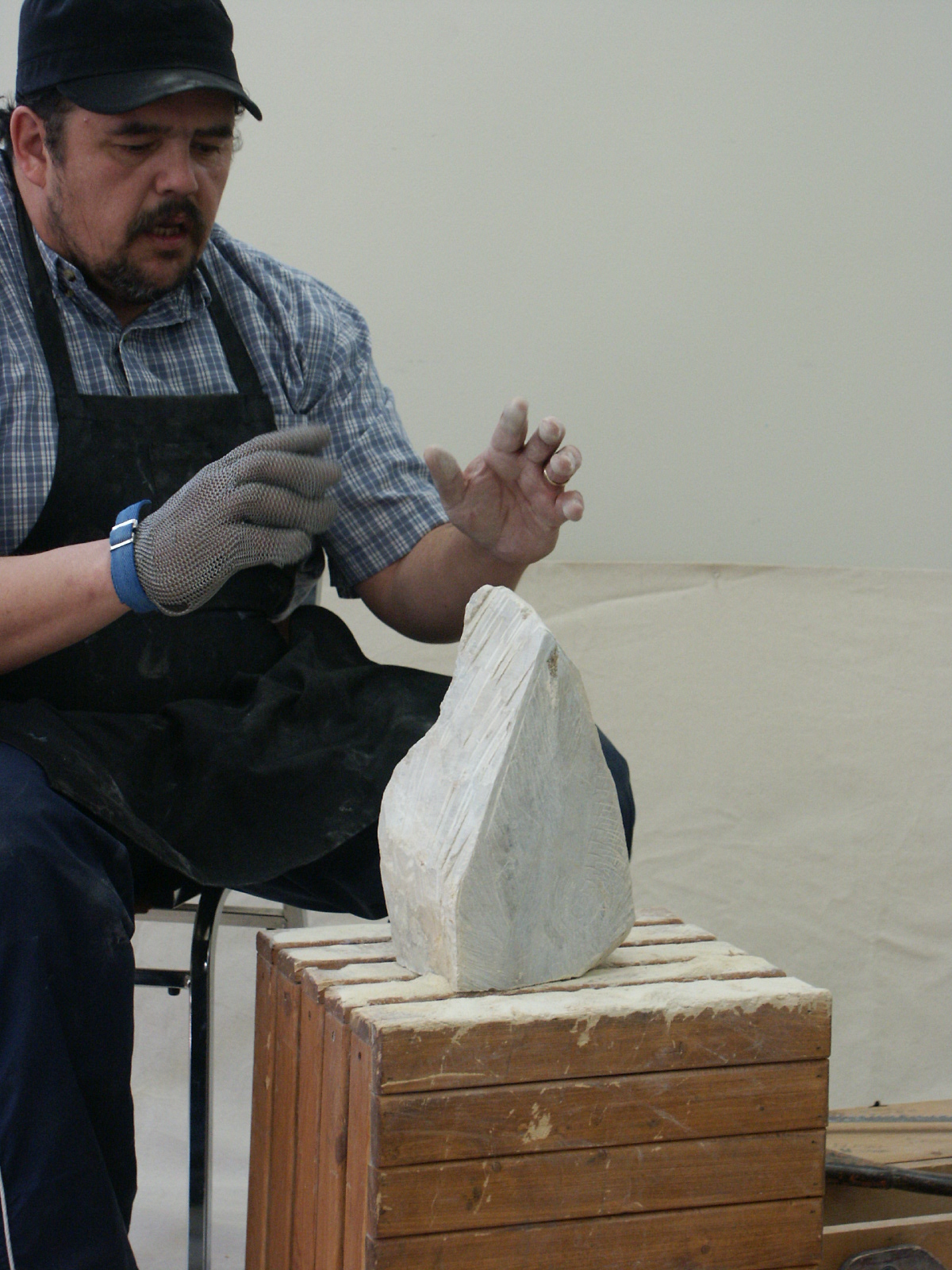
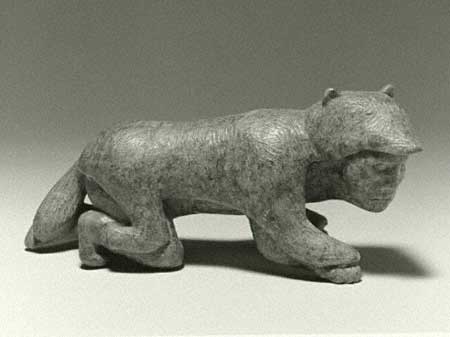
Lyndon discovered his passion and talent for art as an adult while taking classes for his high school diploma. When an art teacher gave Lyndon a piece of soapstone to carve, he remembered what the old people had told him many years ago, that "when you work with something from Mother Earth, pray, smudge, see goodness." So before he began his very first carving, he went outside to place a tobacco offering and to pray. From that moment on, Lyndon has continued his work as a carver and sculptor. He has also integrated his traditional teachings, and his cultural and spiritual practices into whatever he does. He says that he has, "used the arts as a vehicle to drive change, not only for myself, but others as well." He teaches traditional games of the Battle River Cree to children and adults, demonstrating methods used to prepare youth for their future. He finds this cross-cultural work very rewarding. The aboriginal participants experience something positive from their past and some for the first time. The non-aboriginal participants see cultural practices that are not typically in any history books.
Lyndon also advocates for Aboriginal artists in the province of Saskatchewan by participating on committees, panel discussions and as a board member for the Saskatchewan Arts Board and cultural liaison for the Allen Sapp Gallery in North Battleford, Saskatchewan.
 Reconnect to the Spiritual and Artistic Path
For the first five years of Lyndon's life, his father, the late Ernest Tootoosis travelled extensively as a minister in Church of Christ until he was unceremoniously, "let go" by the Anglican church. However, it was when the young Lyndon became very sick, almost dying, that his father returned to his own spirituality and the belief system that he was raised with. In order to save Lyndon from a near-fatal attack of appendicitis, his father attended a healing ceremony which he believed would save the boy. In that ceremony, not only was Lyndon given help from the ustasiniy (rock) spirit to recover and regain his full health, he was also given a spirit name. It would be that spirit helper and his new name that would help guide Lyndon in his life and future work.
After Lyndon made a full recovery, he was often accompanied his father as he began the process of relearning and reclaiming his cultural and ceremonial heritage. It was on these trips to the "old people", elders and ceremonialists that Lyndon was given the opportunity to learn some of the traditional ways. On one occasion, he was allowed to listen and learn the "ways of the pipe" that the old people shared with his father. And it was from that teaching he first learned how to create ceremonial pipes at around the age of twelve. However, it would be a full eighteen years later before Lyndon would return to working with pipe and carving stone.
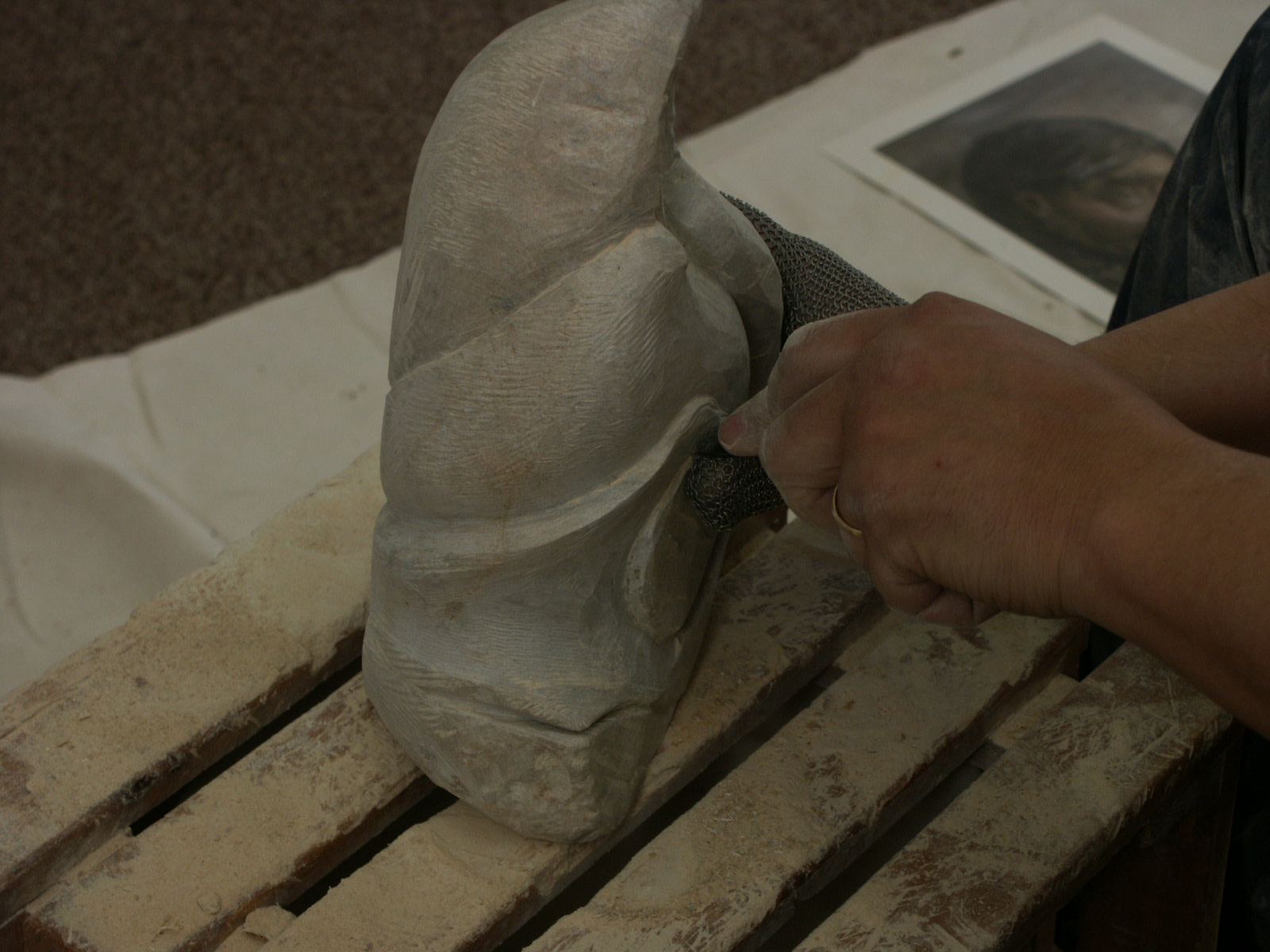 It took another extraordinary experience to finally reconnect Lyndon to his spiritual and artistic path. The evening after he prayed and put out the tobacco for the stone that he was going to carve, he had a powerful dream. His deceased father came to him in his dream and lovingly placed his hand on his chest. Lyndon remembers that, "the heat [of his touch] went right through my body and I went out of my body". He knew this dream was very significant and he also knew he needed to ask someone about what it could mean. The only person he felt that could help him was an old friend of his father (they had gone to residential school together at Onion Lake). Ironically, this woman was also his mother-in-law and she usually acted like she despised Lyndon, but he was desperate to find out the meaning of the dream, so he went visit her out on the reserve. At first she refused to see him or even listen to him, and she was on the verge of walking out when Lyndon blurted out the reason for his visit. After he spoke to her of the dream, she turned back to face him, her eyes full of love, and said, "Your father brought you back to us". Initially, Lyndon thought she meant that his father has awoken his heart to love the family, but he later realized that she meant it was awakening to the People, to the nehiyawi (Cree Indian) way of being. Lyndon also understood that the heat, the love that was in his heart, was meant to be given away and that is why he has dedicated his life to teaching, passing on what he has learned.
WATCH A VIDEO OF LYNDON CARVING
WATCH A VIDEO OF LYNDON TEACHING
Visit www.artsboard.sk.ca or Allen Sapp Gallery