 Beverly Hungry WolfA passion for her language and culture.
 Billy Joe Green Passing on his love of music to his children and grandchildren.
 Lawrence 'Teddy Boy' Houle Passing on his fiddling style and repertoire
 Linda Young Sharing her language and culture
 Louis OgemahA catalyst for “Indian” art in Western Canada.
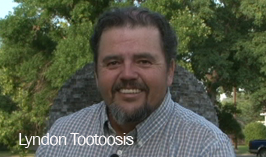 Lyndon TootoosisThe arts as a vehicle to drive change
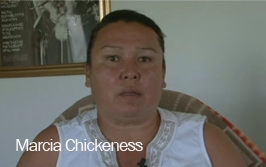 Marcia Chickeness Expressing her artistic ideas and visions
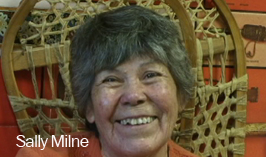 Sally MilneReconnecting with the cultural ways and teachings.
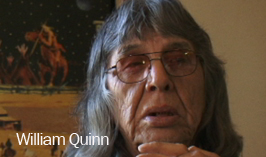 William QuinnHelping others to heal
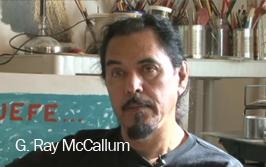 G.Ray MccallumDeconstructing and examining his past to accomplish his "true purpose"
G. Ray McCallum, a Nehiyaw and a registered member of Waterhen First Nation in north-west Saskatchewan, was born and raised on Flying Dust First Nation. The youngest of nine children, he was raised in a very artistic and creative family. When Ray was only five years old he saw an illustration on a calendar and knew he wanted to become an artist. So when he was essentially “abducted” by Indian Affairs officials and taken to Onion Lake Residential School (apparently they were under no obligation to inform or get consent from his mother) at the age of seven, he was already quite a proficient self-taught artist.
By the time Ray left school at age fifteen, he had already achieved commercial success as an artist; he sold his oil paintings by the side of the highway for cash. Almost immediately he began a full-time career as an illustrator and graphic artist, working for various Indian organizations such as the Federation of Saskatchewan Indians and the Saskatchewan Indian Cultural College. Despite not being able to do the kind of artwork that was personally fulfilling to him, Ray did have a number of solo and group exhibitions of his non-commercial paintings and drawings during this period.
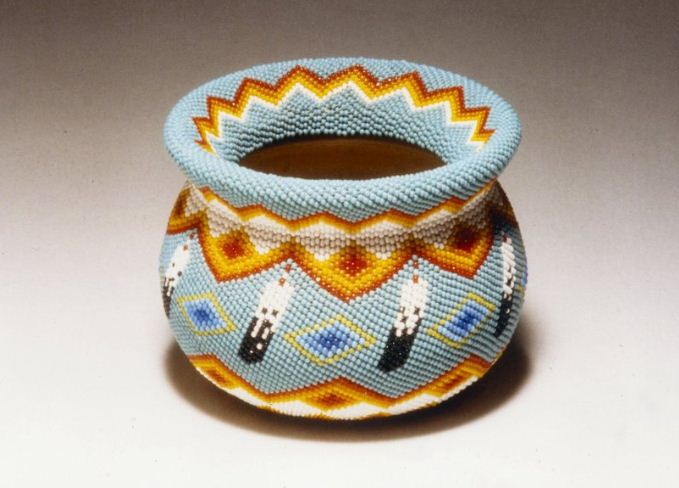
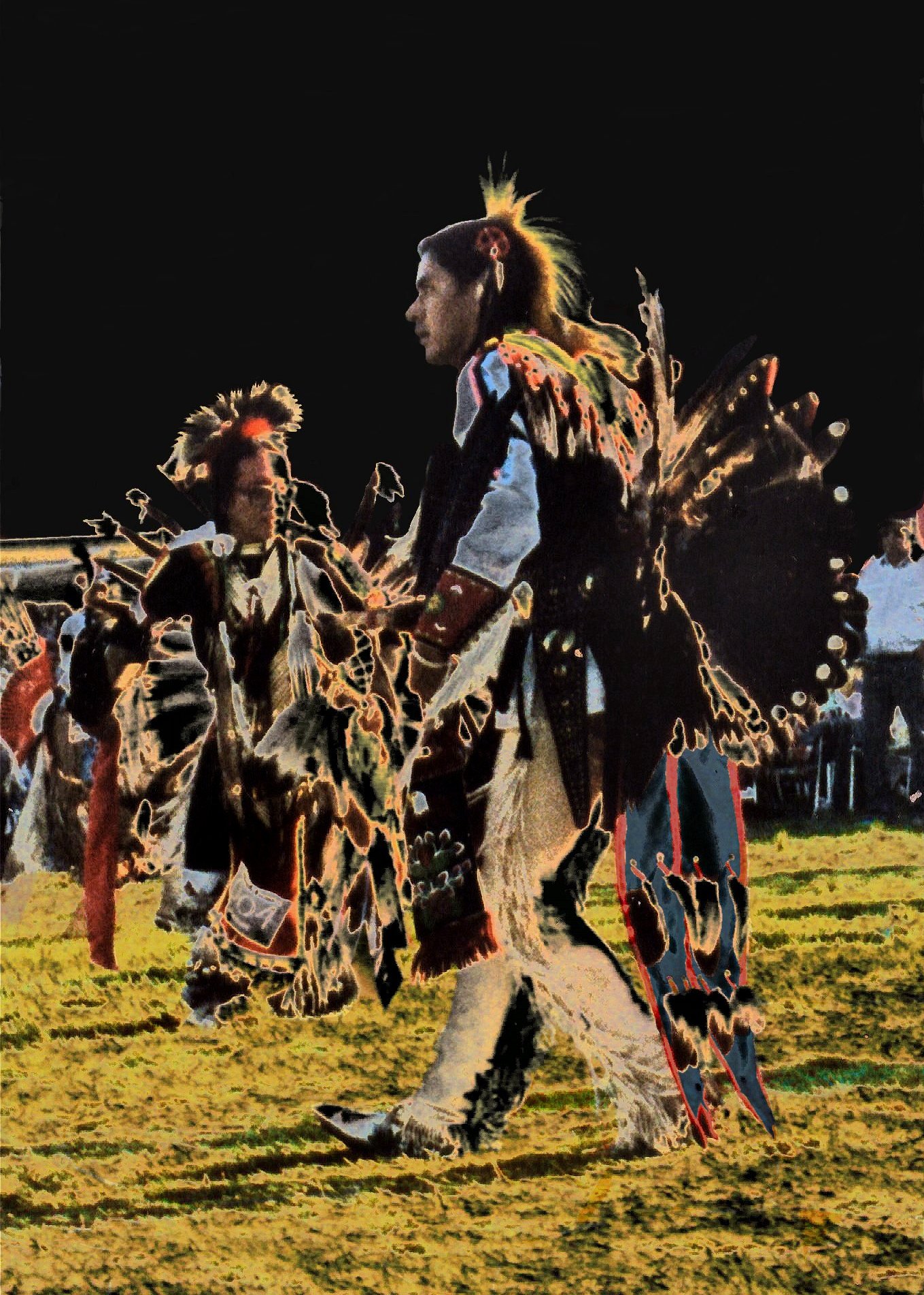
In additional to painting and drawing, Ray also began doing traditional art work by picking up beading and quilling, following in the footsteps of his expert mother. And when he began dancing pow wow in the 1980’s, as an Anishnabe-Style Traditional dancer, he made and beaded all of his own regalia. During this period he began to play the guitar and compose his own music, even performing publically on numerous occasions. More recently, he formed a group called, “Aski” (Land) and they are in the process of recording an album entitled, Gypsy Cree. Ray is also currently working on an art exhibition in which he will finally express and comm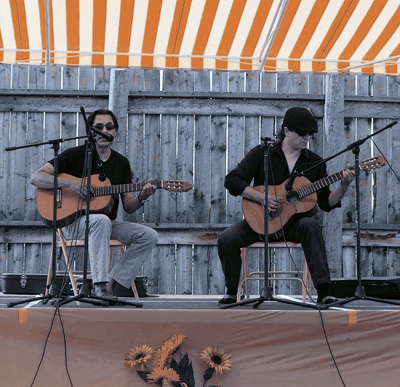 unicate his experiences in residential school. It has been this suppression of his traumatic personal history that Ray feels has always prevented him from being an authentic artist and making art that is honest and open. He feels that by deconstructing and examining his past, he can finally accomplish what is his “true purpose” and for what he “was intended” to do.
Time for Truth
Labeled as, “The Artist” almost from the beginning of residential school, Ray continued to draw and paint, and even play music throughout his school years as an outlet for his creative talents. He also learned at a very young age how to disconnect himself from his real feelings. In order to cope with the physical, sexual and emotional trauma that he was subjected to in both the residential schools he attended, Ray went into his own world, the world of his imagination.
 Although it helped him survive as a child, this response would cause serious problems as he struggled to find his artistic voice in later life. When Ray left school, neither he nor anyone could recognize or even acknowledge the degree of harm that had occurred. People, he suggests, didn’t understand that they needed to deal with the issues, to open up and talk about what had happened as soon as they left school or they would develop serious psychological problems as a result. It was no different for Ray, he like so many others, retreated into denial and avoidance, deeply burying the horrific memories and the terrible feelings that they brought up.
When Ray audited fine art classes at the University of Saskatchewan’s Emma Lake campus he began to really feel the emotional and spiritual disconnect. He discovered with shock that all the artistic ideas he ever had, “had already been done”. It was at that point, he got very discouraged and decided to do purely commercial art because he felt that there was nothing he could “contribute to fine art”. What Ray now understands, is that in order to be able to do his own art, he must be completely honest and truthful, and deal with a past that he had so totally blocked-out.
The work he did as a commercial artist was never enjoyable, because he says it never really “reflected who he was”. As a consequence, he despised his paintings and drawings and whatever he couldn’t sell, he destroyed. His own creations had become not- so-silent indictments against his dishonesty and denial. He says that for years he hid behind the façade of a commercial aesthetic or “utility art”; art that was only good for paying the bills.
Now, almost fifty years later, Ray is developing a solo art show that will represent the first “real paintings” he has done since he was a youth. He recognizes that this is an opportunity to allow his art to take him to a more “conscious level of awareness”. And so the feelings and experiences of residential school that he internalized so deeply are finally coming out. But it is not easy. He says that he still struggles and is in states of denial about some things. When he reaches a block, in order to get the work done, Ray will force himself to look in the mirror to see himself for who he really is. Because as he says, “it’s [the show] not going to create itself”. So he continues with the creative process because Ray understands that he needs to allow the honest raw emotion to play itself out in the work. And as much as he is doing this for his own healing and creative evolution, Ray also sees himself as a conduit because he says that “the story” exists not only in him, but in “other people as well”. And it is time for that story to be finally told, it is time for truth.